


Colony Flow!
4.51.10K Reviews
App Specs
- Version
- 1.0.76
- Updated On
- License
- Free
- Downloads
- 1,000,000+
- Developer
- ABI GAMES PTE. LTD.
- Categories
- Puzzle
- Platform
- Android
Screenshots
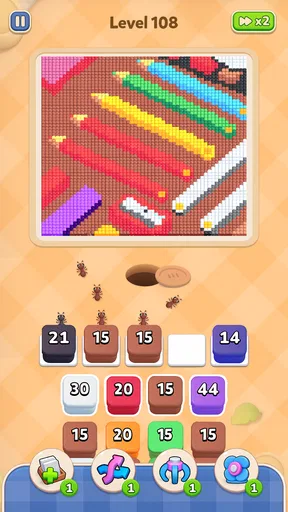
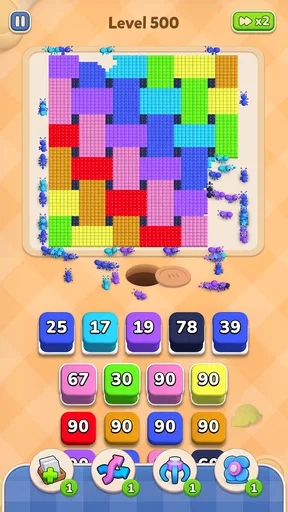
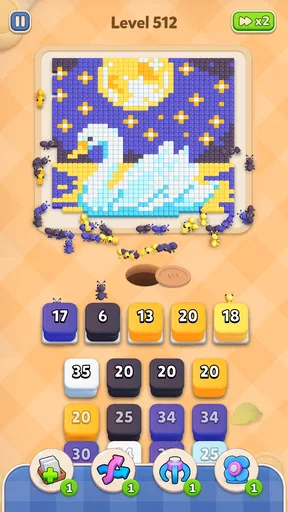
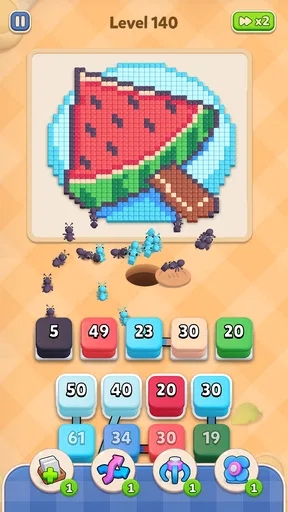
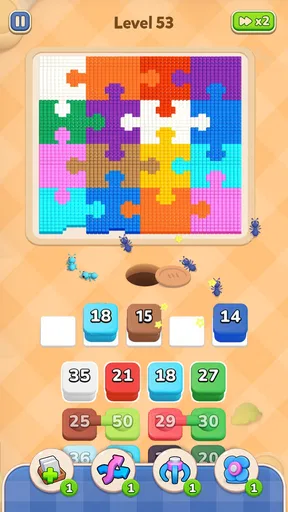
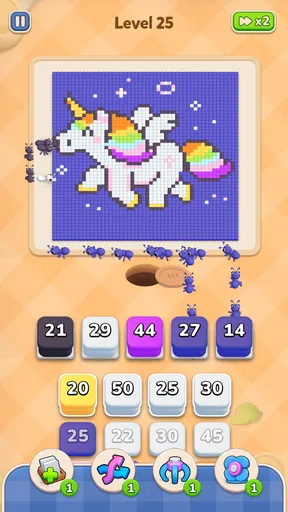
 Analysis by AppCompare
For a first session, I would set aside a few calm minutes rather than open Colony Flow! while juggling messages or rushing out the door. Its appeal depends on noticing how a move changes the board, and that is easier when you can look at the layout without interruption. You do not need to arrive with puzzle-game experience; the useful starting point is simply to observe before acting.
A small routine that makes the first session smoother
Once a board is in front of you, scan for the colors and the available routes before choosing a move. Then make one change and check what it did to the rest of the arrangement. This one-move-at-a-time rhythm is more informative than trying several ideas in quick succession: it helps you learn the relationship between the ants and cubes while keeping the cause of each change clear.
If you are interrupted, it is perfectly reasonable to stop at a point where you can explain your next move to yourself. That is a better pause than leaving the board in the middle of a chain of uncertain decisions. When you return, reassess the current layout instead of assuming your earlier plan is still best; a fresh look can reveal a simpler route.
I like puzzle games that give me something clear to work on without demanding a long session, and Colony Flow! looks built around that kind of quick, focused play. You guide ants through a colorful cube-sorting challenge, with pixel-art scenes to uncover as you progress. The idea is easy to grasp, but the appeal comes from slowing down enough to notice how each move affects the rest of the board.
My first impression is that this is more about orderly planning than frantic action. If you enjoy arranging objects, spotting a path through a crowded layout, and correcting a plan before it becomes a mess, it has a satisfying puzzle-game hook. It is less suitable if you want a story-heavy adventure, direct competition, or a game that tests reflexes more than judgment.
What to expect from the puzzles
At its core, this is a puzzle game about leading ants and sorting cubes by color. That combination gives the board a different feel from familiar match-three games: rather than simply making adjacent matches, you need to think about movement and arrangement together. The pixel-art rewards add a visual goal beyond finishing an individual challenge, giving progress a small sense of discovery.
I would approach each level as a compact planning problem. Before moving anything, take a moment to scan the colors and consider where the ants can go. A move that looks useful on its own may leave the remaining cubes harder to organize, so the most satisfying solutions are often the ones that preserve options. That makes patience more valuable than tapping quickly.
Worth Reading Before You Choose

Switching to Android Auto Means Rethinking Your Driving Routine

Google Calendar Makes a Crowded Week Easier to Manage

Baby Panda World Brings Quick Play to Modern Phones, but Its Game Library Feels Busy

ESPN’s Live Game View Makes Following Close Games Easier

QuizzLand Review: A Good Fit for Short Trivia Breaks, Not Every Player

Basketball Stars: Multiplayer Is Fast, but Can It Recover When Matches Go Wrong?
The game is free to download, while optional in-app purchases range from $1.99 to $99.99 per item. That is a wide spread, so I would treat purchases as something to review carefully rather than part of the basic puzzle experience. If you are trying it casually, you can begin without committing money and decide later whether anything offered is worth it to you.
Colony Flow! is made by ABI GAMES PTE. LTD. It has an average rating of 4.5 from around 66,000 ratings, with over a million installs. Those figures suggest that plenty of players have tried it, but they are not a substitute for your own taste: the main question is whether sorting and planning feel relaxing or repetitive to you.
Who is likely to enjoy it
I can see it working well for someone who wants a puzzle to dip into during a quiet break: while waiting for a coffee, sitting on a train, or taking a few minutes between tasks. The rules are approachable enough to make a first attempt feel manageable, while the sorting element gives you a reason to think before acting. It also suits players who enjoy visual progress and like seeing a finished puzzle contribute to a larger collection of art.
By contrast, I would look elsewhere if you mainly want narrative, character development, or a strong sense of competition. Fans of conventional match-three games may also find the pace more deliberate than they expect. Here, the pleasure is in planning and arranging, not in rapid chains of matches or flashy reactions.
Getting started without overthinking it
The first useful step is simply to open a puzzle and learn what the board asks of you. The short description, “Colony Flow!”, gives the right broad expectation: ants are part of the sorting process, not just decoration around a conventional picture puzzle. I would resist trying to solve everything at once. Focus first on understanding how an ant’s movement relates to the cubes in front of you, then make one deliberate move and observe the result.
For a first session, aim for one clean success rather than a perfect run. Look for a color group that seems straightforward to organize and use it to learn the board’s logic. This is a practical way to avoid the common beginner trap of moving several things at random and then losing track of why the layout changed. If a choice creates a less useful arrangement, pause and reassess instead of repeating the same approach.
The game is listed as suitable for Everyone, which makes its basic audience broad, but younger players may still benefit from an adult explaining the goal if they are unfamiliar with sorting puzzles. The current version is 1.0.75, and the minimum operating-system requirement is 7.1. I would check that your device meets the requirement before installing, especially if you are using an older phone or tablet.
Your first meaningful win
A good first success is not merely finishing a board; it is understanding why your final sequence worked. After you complete a puzzle, briefly replay the decisions in your head: which move opened space, which one grouped colors, and which action would have made the rest harder? That little review turns a quick win into a reusable strategy for later boards.
One useful habit is to separate “safe” moves from “committing” moves. A move that keeps several options open can be a sensible early choice, while a move that funnels cubes or ants into a narrow arrangement deserves more thought. This is not a complicated system to memorize; it is simply a way to avoid treating every available action as equally harmless.
Another practical tip is to use the pixel-art goal as motivation, not as a reason to rush. If you are mainly interested in seeing what image comes next, it can be tempting to push through boards without learning their patterns. Taking an extra moment to understand a tricky arrangement may make the next puzzle feel less like trial and error. The art gives progress a pleasant payoff, while the puzzle itself remains the part that asks for attention.
Where new players may get stuck
The most likely confusion is assuming that colorful cubes should be handled like pieces in a match game. That expectation can lead to hurried moves before you have understood how guiding the ants shapes the sorting task. I recommend treating the board as a small traffic problem: consider where movement will lead and whether a change helps the overall arrangement, not just the nearest color.
It is also easy to mistake a failed plan for a lack of skill. In a sorting puzzle, one early move can make later choices awkward even when it looked reasonable at the time. When that happens, pause and identify the point where the board became constrained. That tells you more than making a string of random corrections, and it helps you approach a similar layout with a better plan.
If you are playing in a short break, do not feel obliged to finish a difficult puzzle at any cost. A deliberate stopping point is better than tapping through moves while distracted. This game’s appeal is concentrated attention, so it may be a poor fit for moments when you cannot spare even a little focus. For those situations, a simple arcade game or an idle title may be more comfortable.
How it compares with other puzzle choices
Compared with match-three games, Colony Flow! asks for more spatial planning and less quick pattern recognition. Compared with classic sliding-block puzzles, its ants and color sorting give the board a more lively theme, while the pixel-art rewards add a visual thread between challenges. The trade-off is that players who prefer a single, abstract mechanic may find the combination less immediately transparent than a plain grid puzzle.
It is also a different kind of casual game from word puzzles or number challenges. There is no need to search for vocabulary or calculate a sequence; the challenge is to read the layout and manage movement. That makes it a good alternative when you want a visual puzzle, but not necessarily when you are looking for a game that exercises language or arithmetic.
For a first-time player, I would give it a few boards before deciding whether it clicks. One puzzle may teach the basic idea, but a little more play helps reveal whether you enjoy the careful sequencing that sits underneath the colorful presentation. If you find yourself planning ahead and feeling pleased when a move opens the board, that is a strong sign it suits you. If every move feels like guesswork, a more direct puzzle style may be a better choice.
When I would choose it—and when I would not
I would recommend trying it if you want a free, approachable puzzle to play at your own pace and enjoy combining movement with color sorting. Its all-ages rating and simple central premise make it easy to share with family, while the planning gives older players something to think about. It is especially appealing if you like completing a small task and seeing visual progress afterward.
I would skip it if your priority is a deep campaign, a competitive ladder, or a puzzle that can be played almost entirely on autopilot. The game’s central loop depends on paying attention to how the board changes, so it is not ideal background entertainment. And although the download is free, the available purchase range is worth keeping in mind if you prefer games with no optional spending at all.
A measured recommendation
For me, Colony Flow! is most promising as a short-session sorting game with a distinct ant-guiding twist. Its best moments should come when a board looks tangled, then becomes understandable after a careful sequence of moves. The pixel art gives that effort a gentle reward without changing the fact that the puzzle itself is the main attraction.
If you want to try it, start with an uncomplicated board, make one considered move at a time, and judge it by whether the planning feels satisfying—not by how quickly you finish. With an Everyone content rating and a free download, it is easy to sample, though the optional purchases are a reason to keep an eye on spending. I would put it on the shortlist for relaxed visual puzzling, but choose another genre if you want story, speed, or hands-off play.
Choosing the right moment to play
A realistic fit is a short wait when you are seated and can give the screen your attention, such as a quiet stretch before an appointment. I would start one puzzle, make a few deliberate decisions, and stop if the layout begins to demand more concentration than the moment allows. That keeps the game pleasant rather than turning a small break into a frustrating attempt to solve things while distracted.
It is also worth deciding what you want from a session. If you want to unwind by making a steady series of low-effort taps, this may not be the best choice; its sorting decisions ask you to stay mentally present. If you want a compact visual challenge with a clear sense of progress, it is a more fitting option than an idle game, while a word or number puzzle is the better pick when you specifically want language or arithmetic practice.
What to do when a board stops making sense
When the arrangement feels confusing, resist the urge to treat every possible move as a clue. Instead, identify the immediate goal you are trying to achieve and check whether the next action supports it without closing off useful choices. If you cannot explain why a move helps, waiting a moment is often smarter than making it just to keep the board moving.
That approach also gives you a fair way to judge whether the game is clicking. Some uncertainty is normal while learning how movement and sorting interact, but if you consistently feel that outcomes are arbitrary, the deliberate planning style may not be your kind of puzzle. I would give it a few considered attempts, then switch to a simpler, more direct format if you still prefer a clearer single-step challenge.
Worth trying for the right kind of puzzler
The main question before installing is not whether you like ants or pixel art on their own, but whether you enjoy arranging a board through careful movement. The free entry makes it easy to test that preference, and the Everyone rating makes the game approachable for a broad audience. Just keep the optional purchases in mind and make a deliberate choice if an offer appears; the puzzle’s basic appeal is the thinking, not spending.
For a new player, I would count the first meaningful success as the moment you can explain why a sequence worked, rather than simply reaching the end of a board. If that small act of planning feels rewarding, keep going at your own pace. If you would rather have a story, a fast reflex challenge, or something that runs in the background, another kind of game will suit you better.
Pros
- Simple controls make it easy to start playing.
- Short levels suit quick gaming sessions.
- The colony-building theme gives the puzzles a clear goal.
- Gradually harder challenges help keep the gameplay engaging.
- A minimalist presentation keeps attention on the puzzles.
Cons
- Some levels may feel repetitive over time.
- Later puzzles can be difficult without clear hints.
- The game offers limited variety in its core mechanics.
- Progress may feel slow for players seeking a faster pace.
- It may not appeal to players who prefer action-oriented games.
FAQs for Colony Flow!
What is Colony Flow!?
Colony Flow! is a casual puzzle game built around directing a stream of tiny colony members toward their destination. You guide their movement by adjusting the path or flow around obstacles, then watch the group travel through the level. Its appeal is in combining simple controls with planning: a route that looks straightforward may still need careful timing or a change of direction.
How do you play Colony Flow!?
The main goal is to guide the colony safely through each stage, using the available controls and routes to avoid hazards and reach the target. Levels are designed to be approachable, so you can quickly understand the basic idea, but later puzzles may require more thought about where the group will move and when. Check the on-screen instructions at the start, since mechanics can vary by level.
Is Colony Flow! free to download, and does it include in-app purchases or ads?
The price and monetization details can differ by platform, region, and version. Before downloading, check the Colony Flow! listing in the Google Play Store or Apple App Store for its current price, in-app purchase disclosures, and advertising information. A free download does not necessarily mean every feature is free, and store listings are the best place to confirm what applies to your device.
Can I play Colony Flow! offline?
Whether Colony Flow! works without an internet connection may depend on the current version and on features such as ads, purchases, or online services. If you need a game for travel or limited connectivity, try launching it once while online and then test it in airplane mode. Also review the store listing and the developer’s notes, as offline availability can change after updates.
Which devices support Colony Flow!, and is it suitable for children?
Compatibility depends on your device’s operating system and the minimum requirements shown in the app-store listing, so check those details before installing. The puzzle-style premise may be appealing to a broad audience, but age suitability, advertising, and purchase options should be assessed using the store’s age rating and content disclosures. Parents may also want to review device-level purchase and screen-time controls.


